For years, critics of school choice have argued that programs like Education Savings Accounts (ESAs) primarily benefit families in urban and suburban areas. But data from the Iowa Department of Education tells a very different story.
A comparison of certified nonpublic school enrollment by resident district from 2022–23 (pre-ESA) to 2025–26 reveals a clear and compelling trend:
Rural Iowa families are increasingly choosing nonpublic education.
The data shows that:
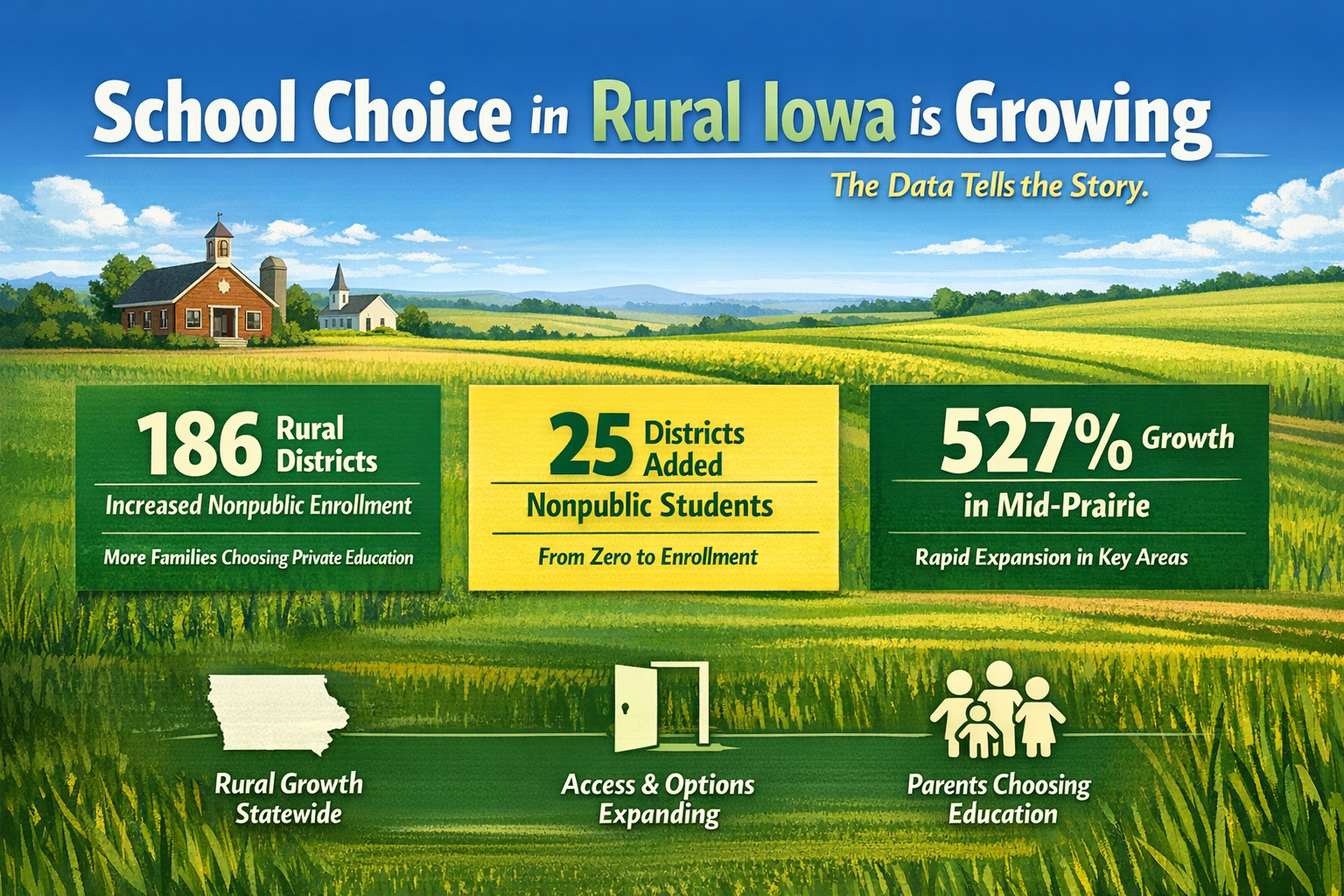
- 186 rural public school districts saw an increase in students attending nonpublic schools
- 25 districts that previously had zero students enrolled in nonpublic schools now have students choosing those options
This is not isolated to a handful of communities—it is a statewide rural trend.
Where Growth Is Happening
Some of the strongest gains occurred in districts with established nonpublic school options, including:
- Mid-Prairie (+158 students, +527%)
- Pella (+85 students)
- Decorah (+50 students)
- Carroll (+81 students)
- Algona (+68 students)
These communities already had strong educational ecosystems, and with expanded access, more families are choosing the options that best fit their children.
But growth is not limited to these areas.
Smaller districts like Postville, South Tama County, and New London saw dramatic percentage increases, often moving from just a handful of students to dozens
A Shift in Rural Access
Perhaps the most telling statistic is this:
25 rural districts went from zero participation to active nonpublic enrollment.
That means families in these communities are now exercising choices that simply weren’t being used, weren’t accessible, or didn’t exist just a few years ago. This represents a meaningful shift in how rural families are accessing education.
These trends reinforce several key realities:
- School choice is not just an urban issue: Rural families are participating, and in many cases, leading the way.
- Demand existed before ESAs: The strongest growth occurred in areas where nonpublic schools were already present. ESAs didn’t create demand—they expanded access to it.
- Access is expanding: New districts entering the data show that school choice is reaching families who previously had limited or no participation.
The Bottom Line
The narrative that school choice is only for urban/suburban areas doesn’t hold up.
Rural Iowa is choosing, and the data proves it.
As policymakers and stakeholders consider the future of education in Iowa, this data offers an important reminder: Families across the state, regardless of zip code, want the ability to choose the best education for their children.
And increasingly, they are doing just that.