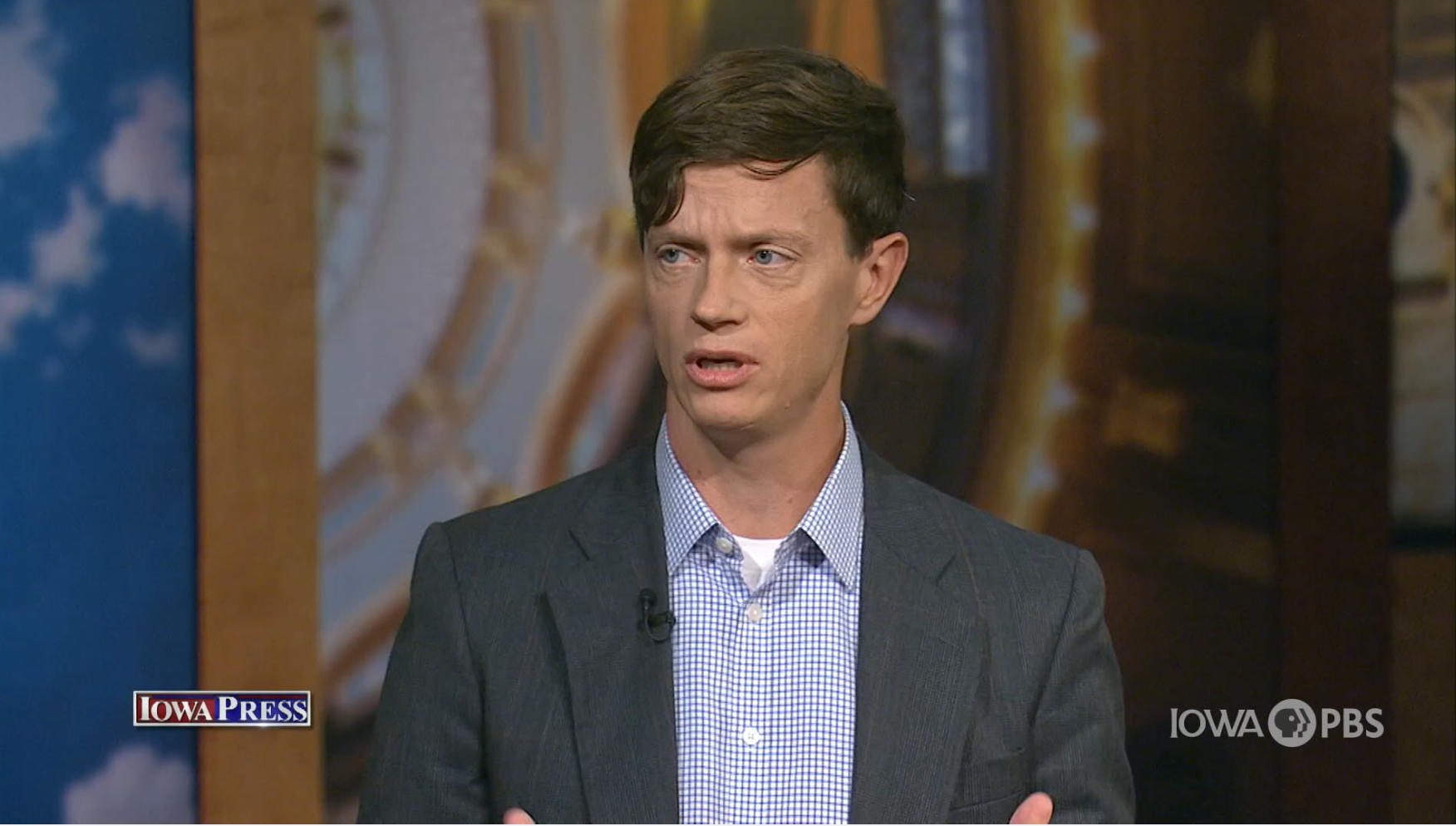
During an Iowa Press interview in June following the primary, Democratic gubernatorial candidate Rob Sand argued for restricting eligibility for Iowa’s Education Savings Account program:
“We shouldn’t be giving private school vouchers to the wealthiest families in the state of Iowa who are already sending their kids to private school anyway and making no sacrifice financially in order to do so. We have a budget that’s upside down, and we are paying people to do a thing they were going to do anyway. That makes no fiscal sense whatsoever.”
When asked what income cutoff he would suggest, Sand responded:
“I’m open to a conversation on that. I would start at the same level that they had this at for the first year.”
In the program’s first year, students already attending a nonpublic school were subject to a means test set at 300% of the federal poverty level. If that same standard were applied using the 2026 federal poverty guidelines, the income limits would be:
- Two-person household: $64,920
- Three-person household: $81,960
- Four-person household: $99,000
- Five-person household: $116,040
- Six-person household: $133,080
Under that policy, a family of four earning $99,000 could qualify, while a family earning $99,001 could be denied. One additional dollar would determine whether a child remained eligible for educational choice.
That is the fundamental problem with means testing.
Crossing an arbitrary income line does not make private-school tuition easily affordable. Families must still pay for housing, food, transportation, health care and other necessities. Many make substantial sacrifices to provide the education they believe is best for their children.
We do not ask parents to disclose their income before allowing their children to attend a publicly funded district school. A child does not become less deserving of educational opportunity because a parent received a raise, worked overtime or took a second job.
Restoring the first-year cutoff would divide Iowa children according to their parents’ income. It would tell some families that they earn too much to direct education funding toward their child, even though they pay the same state taxes and remain responsible for the full cost of raising and educating that child.
School choice should not disappear when a family crosses an arbitrary income threshold. Every Iowa child deserves access to the education that fits, and every Iowa parent should be trusted to help make that decision.
Iowa should continue providing educational opportunity for all; not return to a system that divides children through a government means test.